The question that used to stop every OER conversation — "but does free mean worse?" — has been answered. A 2024 meta-analysis of 26 studies on OER and student achievement found students in courses using open materials performed at least as well as, and often better than, students using commercial materials. And the largest study to date — a report drawing on nearly 700,000 student records across 15 institutions — found the share of students earning A's rose after instructors adopted OER, with no institution type showing a decline.
Why Free Materials Stop Being the Real Story
Read the OER research carefully and the interesting finding is not the price. It is that OER works because it changes what teachers can do to the curriculum:
- Adaptability: openly licensed materials can be edited, rearranged, localized, and updated. A textbook must be adopted as written or abandoned; an open unit can be revised into your course — which is exactly the coherence-and-alignment work the rest of curriculum research says matters most.
- No access cliff: every student has the material on day one. The commercial textbook's two-week lag while students wait for financial aid quietly amputates the first unit.
- Revision speed: a dated statistic or superseded example can be fixed in an afternoon, not in a publishing cycle.
The meta-analytic pattern is striking not because OER wins but because it ties: freely adapted materials match materials that cost hundreds of dollars per student. Once price is off the table, adaptation is the whole argument.

Using OER Well: A Design Checklist
The failure mode is treating open materials like a free textbook — adopting wholesale and inheriting someone else's incoherence. The research on strong OER adoptions shows a consistent pattern:
- Start from your objectives, not the resource. Search by the learning target, not by topic vanity search; take the pieces that fit your sequence, not a whole book because it exists.
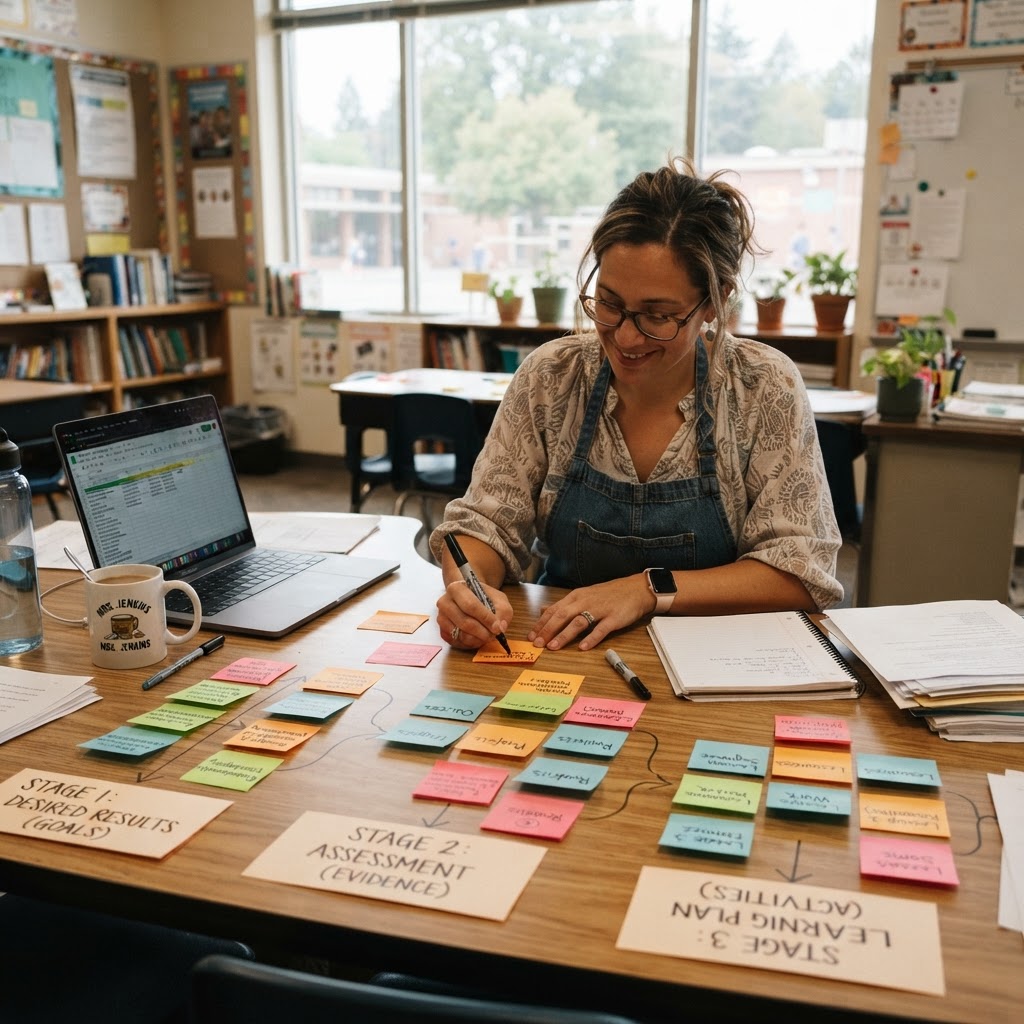
- Map before you commit: run the OER unit against your existing curriculum map; note what it assumes students know (the prerequisite audit).
- Localize deliberately: swap examples, contexts, and names for your students' reality — the one instructional move that costs nothing financially and the most design value.
- Contribute back: the ecosystem runs on remix; sharing your revision is what keeps the resource pool alive and reviewed.
For teachers building on TeachAppeal, the logic is identical: a store full of teacher-made materials that other teachers adapt is the same model — many small, revisable, classroom-tested units beating one monolithic, uneditable one. The OER evidence base is the strongest argument yet that curriculum quality lives in fit and adaptation, not in the publisher's logo.