Ask teachers why a student disengaged and you will hear about the lesson. Ask the student and you will hear about a relationship. The research sides with the student. In the landmark meta-analysis — Roorda, Koomen, Spilt, and Oort's review of 99 studies spanning preschool through high school — the affective quality of teacher-student relationships had medium-to-large associations with engagement and small-to-medium associations with achievement. Read that order carefully: relationships move engagement first and most, and achievement follows through it.
What the 99 Studies Found
- Positive relationships (closeness, warmth, low conflict) correlated with engagement across 61 studies and more than 88,000 students — a large evidentiary base by any standard.
- Negative relationships (conflict, dependence) showed even stronger effects in the opposite direction — a hostile relationship with one teacher predicts disengagement more reliably than a warm one predicts engagement.
- The effects were stronger in secondary school — adolescents are more, not less, relationship-sensitive than younger children, upending the intuition that warmth is an elementary-school matter.
The asymmetry is the practical finding: disengagement research consistently shows students do not need every teacher to be their favorite; they need no teacher to be their adversary. Conflict does more damage than warmth does good — so the highest-leverage relationship move is repairing the one relationship in the room that is actively bad.
Why Engagement Is the Pathway
Relationships do not raise achievement by making students feel good; they raise achievement by changing what students do. A student who trusts the teacher accepts corrective feedback (the highest-value instructional interaction in any classroom) instead of defending against it. A student who belongs attempts harder problems, because error is socially survivable. The engagement statistics in the meta-analysis are the behavioral trace of these micro-decisions: an extra attempt, an honest draft, a question asked instead of swallowed.
Relationship Moves With an Evidence Base
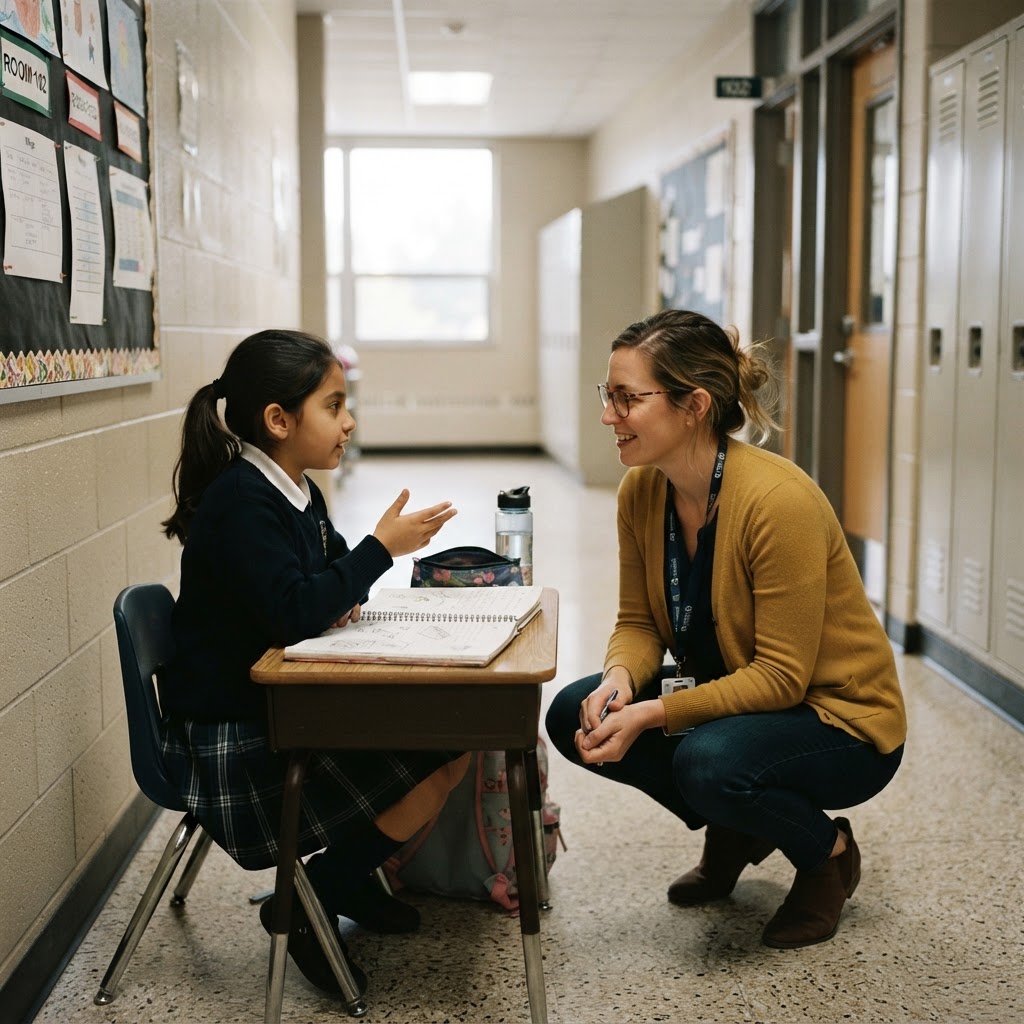
- The two-minute intervention: for two minutes a day for ten days, talk to your least-connected student about anything but school. (The practice is widely studied precisely because it is so cheap.)
- Repair fast, first: the day a public correction goes wrong, address it privately and own it. One repair converts a conflict story; a semester of goodwill cannot survive an unrepaired one.
- Greet at the door: the most replicated small-scale engagement finding there is — name, eye contact, welcome. It predicts on-task behavior in the first minutes, which predicts the hour.
- Feedback about the work, warmth about the person: keep the correction focused on the task so students never have to choose between your standards and your regard.
You cannot friendship your way to engagement — the research is about professional warmth, structured care that survives a bad Tuesday. But the direction of the evidence is not subtle: in the list of engagement levers you control, the human one is near the top.