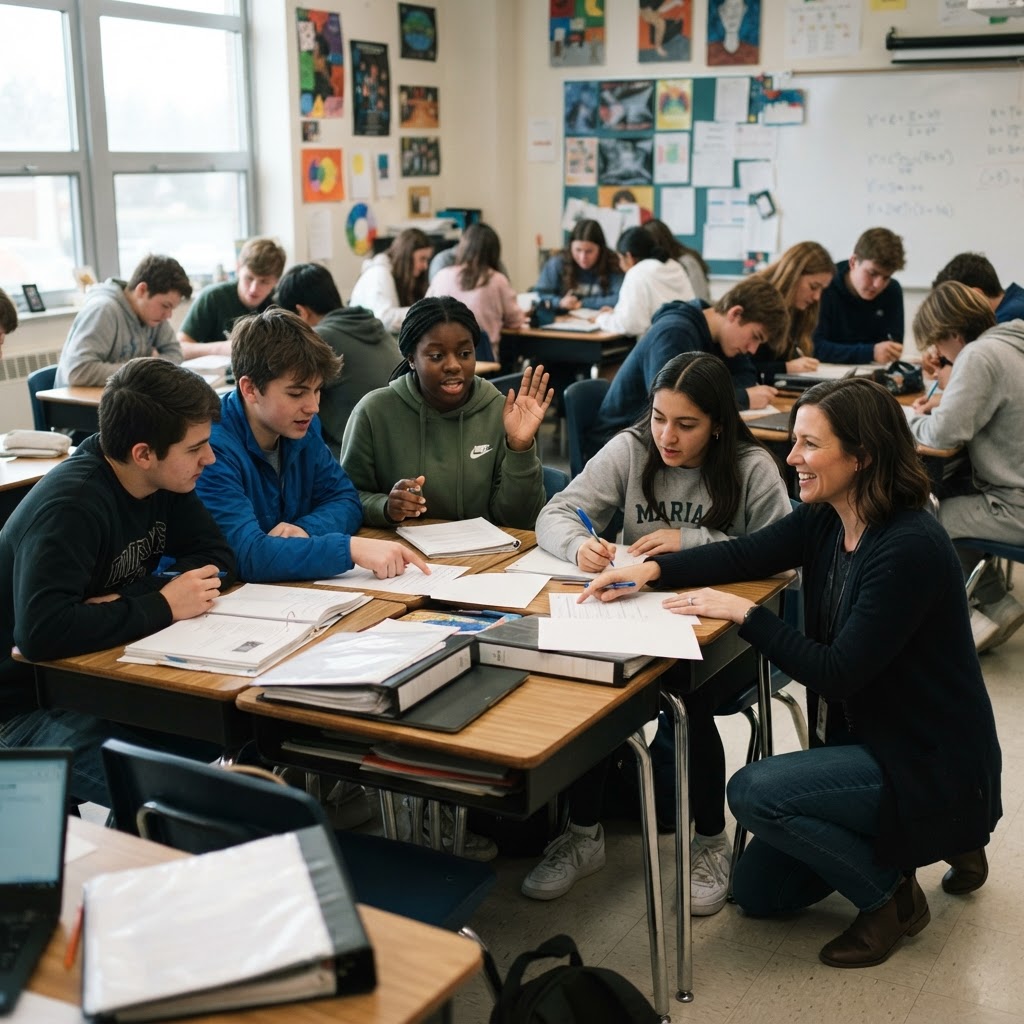
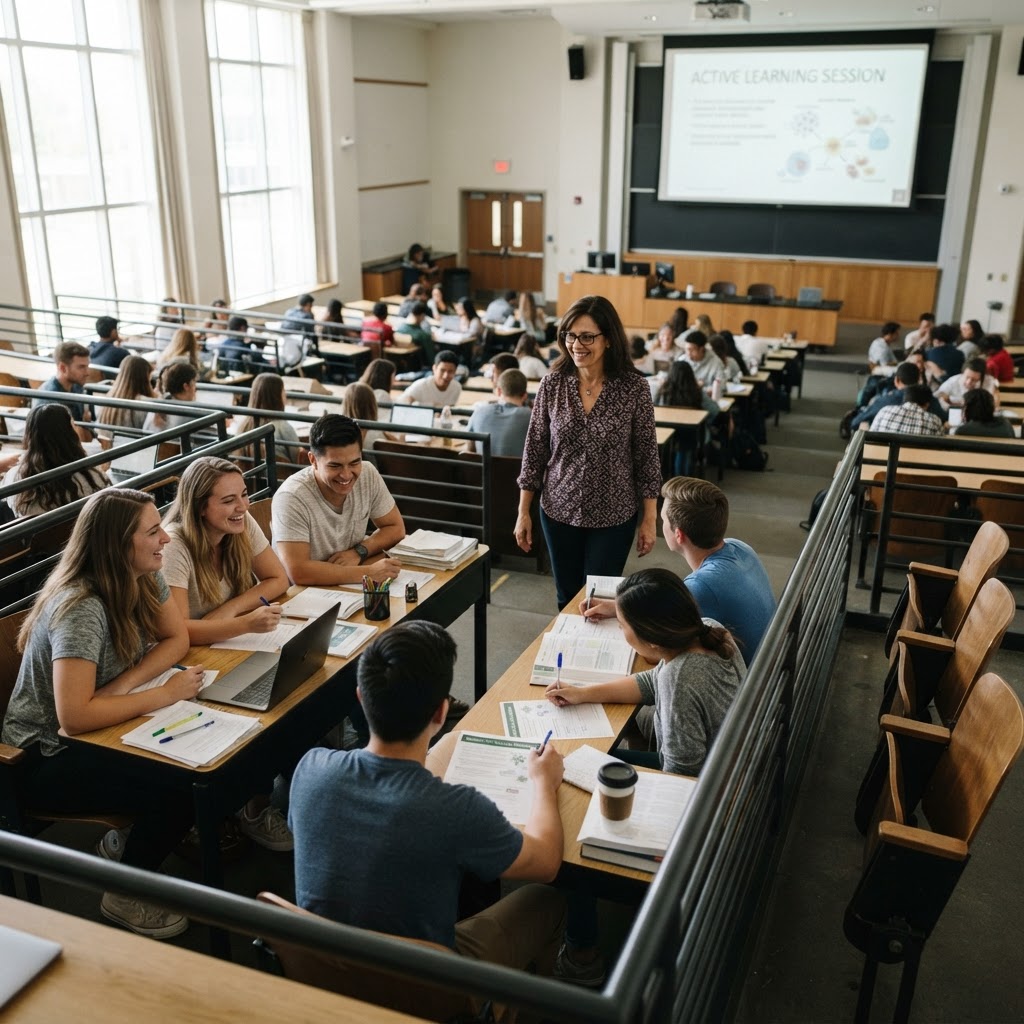
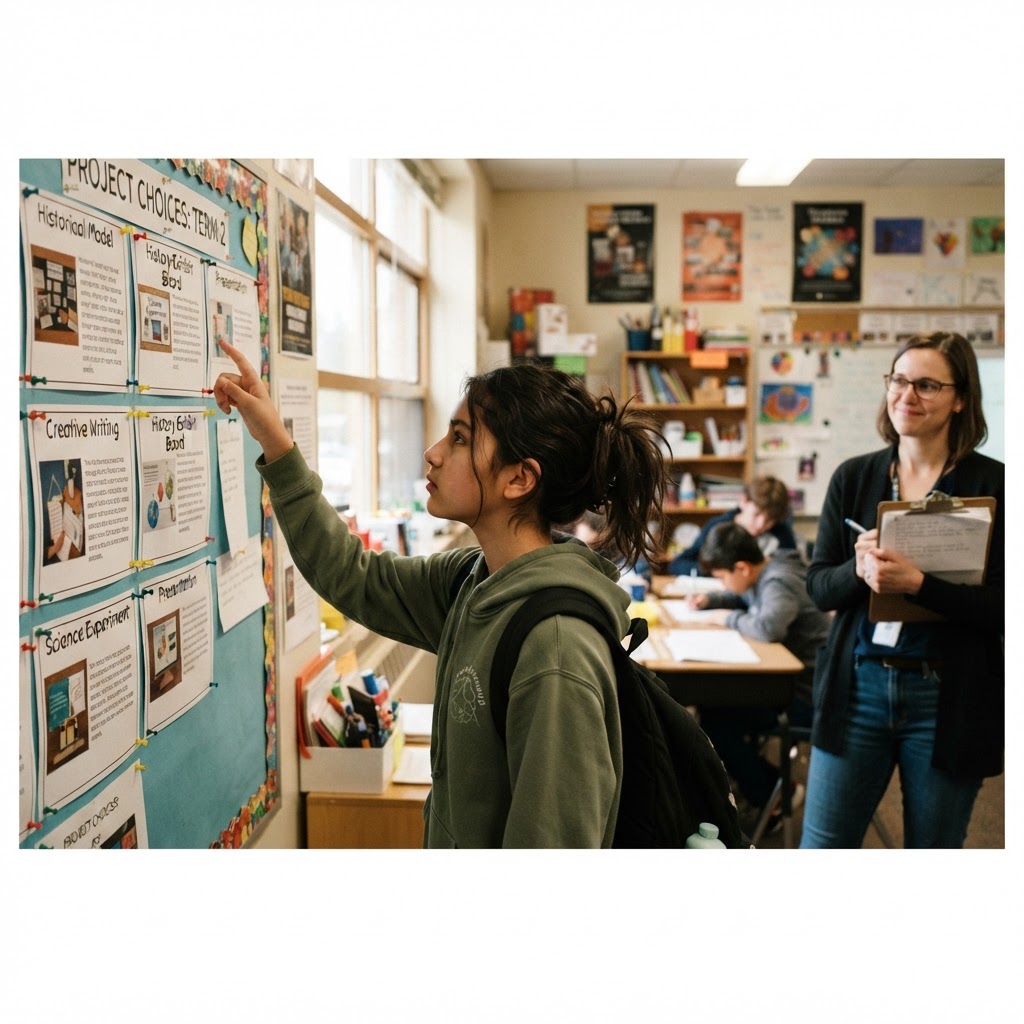
Elliot Aronson designed the jigsaw classroom in 1971 in Austin, Texas, at the request of a superintendent whose schools had just desegregated and fractured. His insight was structural: make each student the sole carrier of a piece of the lesson, so that no one can learn the material without everyone else. Fifty years on, the method has a four-decade track record of reducing conflict and raising outcomes, and a 2023 systematic review and meta-analysis of its educational effects confirms what practitioners suspected: it works, and part of why it works is that engagement is designed into the structure itself.
How It Runs
- Divide the lesson into chunks (four or five, no more).
- Home groups: each student receives one chunk.
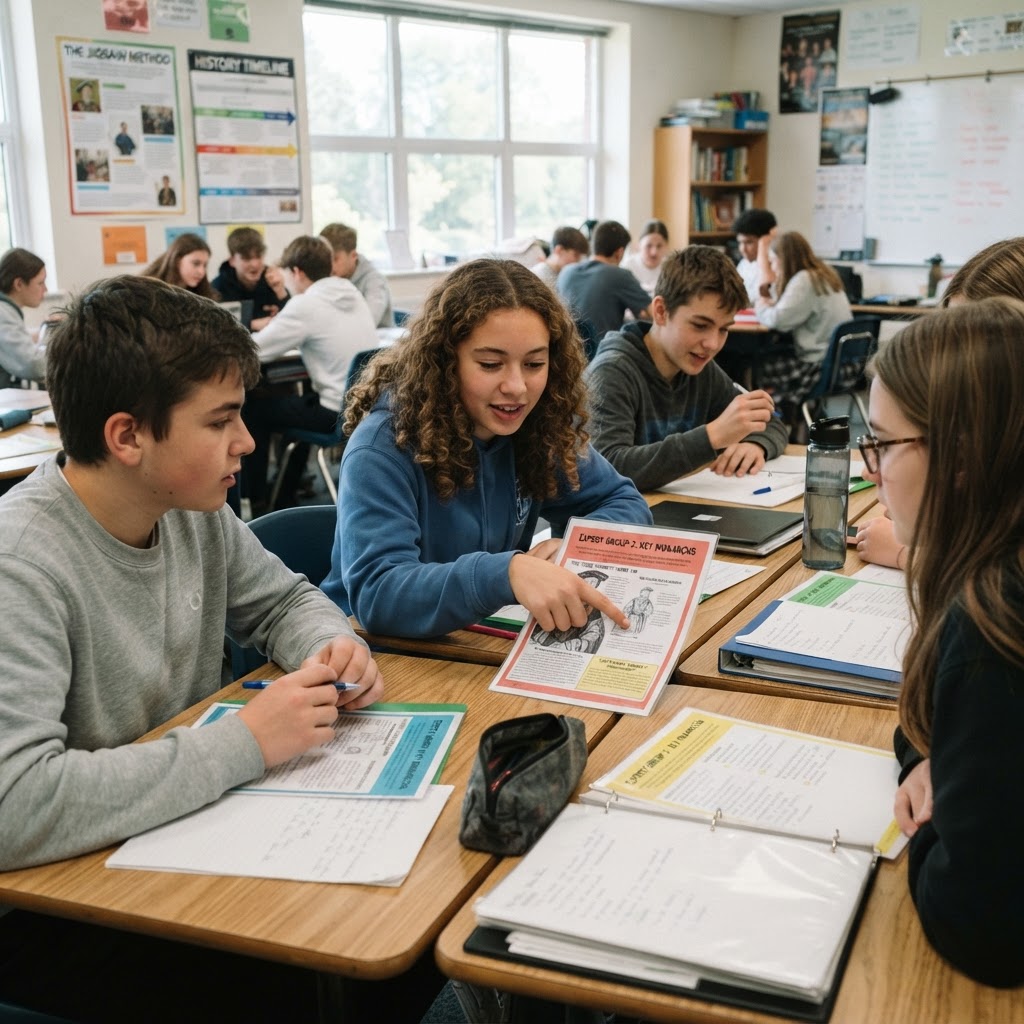
- Expert groups: all students with the same chunk meet, master it, and rehearse teaching it.
- Return: home groups reassemble, and each student teaches their piece. Nobody can skip anyone.
- Assess all material, individually.
Engagement in jigsaw is not a hoped-for mood; it is an architectural fact. The student who never volunteers cannot hide — the group's success literally depends on them, and every other member has a structural reason to help them succeed.
What the Evidence Shows
The meta-analytic review found positive effects across achievement, engagement, and social outcomes, echoing Aronson's early finding of large achievement gains — while noting honestly that effects vary with implementation quality (more on that below). The jigsaw.org archive collects the longer history: reduced prejudice, increased empathy, and the pattern most interesting to engagement-focused teachers — students teaching each other report more liking of both the subject and their classmates than students receiving the same content as an audience.
The Implementation Findings That Separate Working Jigsaw From Chaos
- Chunk size is the whole design: each piece must be genuinely teachable by a student in 3-5 minutes. Too-big pieces produce expert groups that drown and home groups that stall.
- Rehearsal is not optional: the expert-group step — where students practice explaining — is where the learning happens; home groups merely deliver it. A jigsaw without rehearsal is a report-back, not a jigsaw.
- Assign chunks, don't let students pick: random or teacher-assigned distribution keeps status from sorting students into easy and hard pieces.
- Individual accountability closes the loop: the final assessment must be taken alone. Group grades let free-riders teach everyone that participation is optional.
One caution from the research: jigsaw suits declarative and conceptual material — ecosystems, causes of a war, parts of a system. It is the wrong tool for a skill that must be fluently demonstrated, not narrated. For the content it fits, though, it remains the best-documented way to turn a room of spectators into a room of mutually dependent experts.