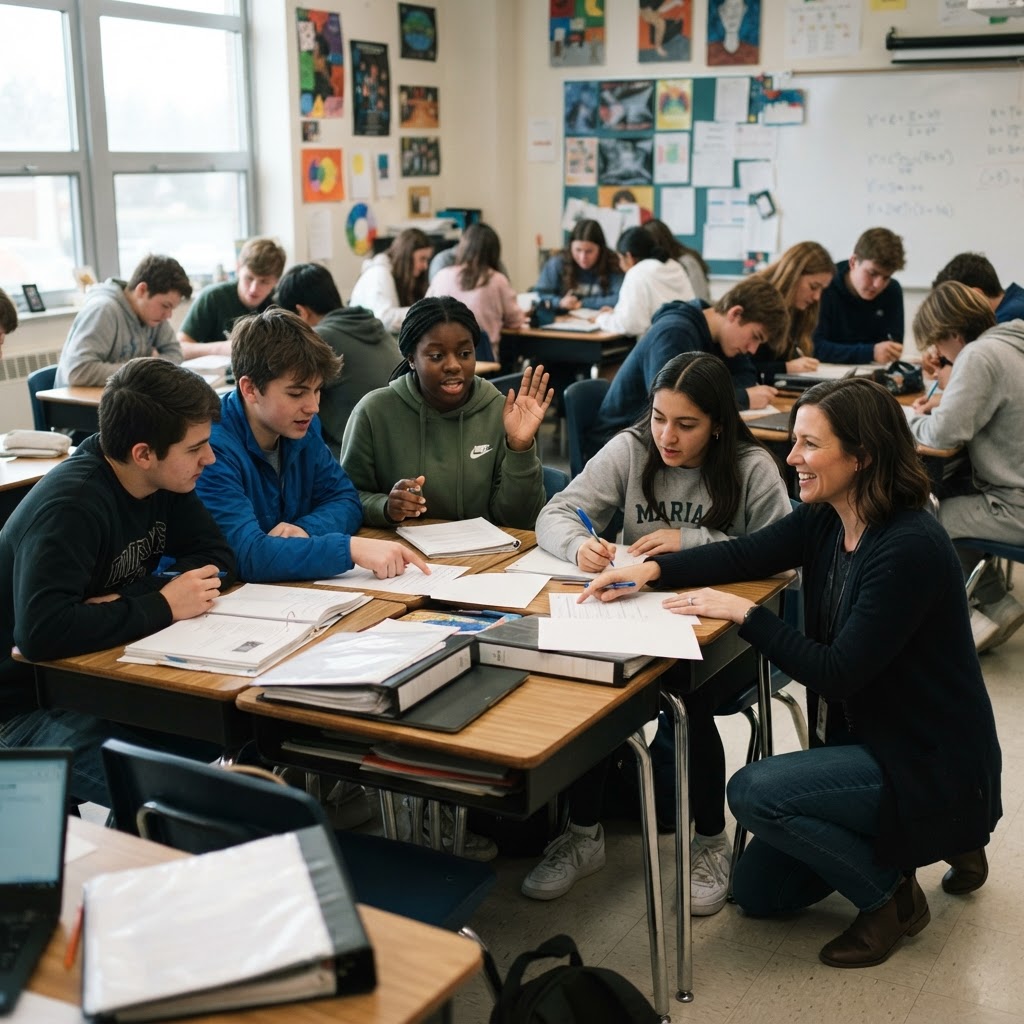
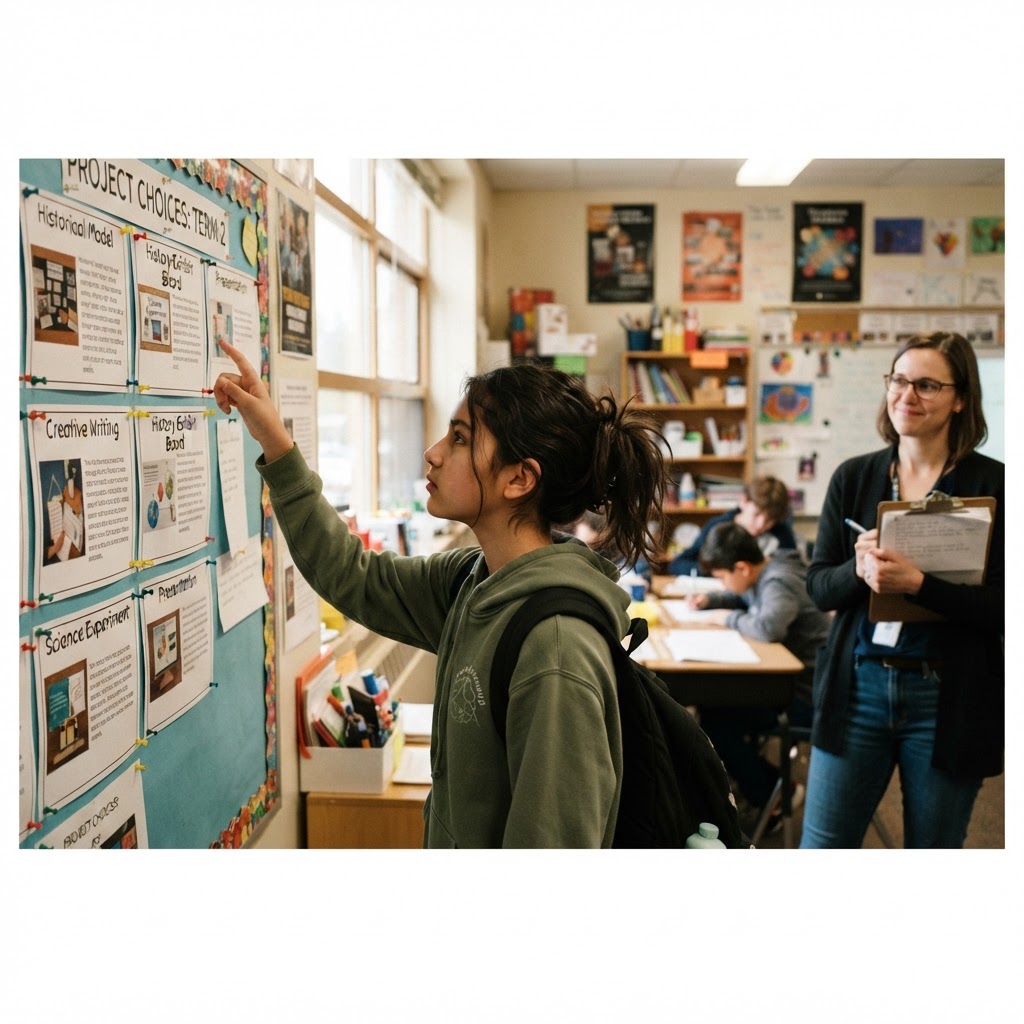
"Student voice" suffers from a definitions problem: it can mean a suggestion box, or it can mean students co-designing the assessment. The research tradition that takes it seriously is self-determination theory, whose education work — summarized at the theory's education hub — treats voice as the primary channel through which the need for autonomy is met. Voice is how autonomy stops being a feeling and becomes a practice: students having real influence over decisions that affect their learning.
The Ladder of Voice
Not all voice is equal. Sorting the practices by how much actual influence transfers:
- Consultation: exit-ticket feedback on pace and clarity. Cheap, valuable, and the floor — not the goal.
- Choice within structure: topics, texts, product formats, group roles. The workhorse of autonomy support (see the choice research in this series' autonomy article).
- Co-design: students help build the rubric, define quality examples, or set the success criteria for a task. This is where voice starts producing metacognition: to set criteria, a student must analyze what quality is.
- Governance: class norms, consequence systems, curriculum emphasis. The top rung; rare, powerful, and requiring real teacher courage.
The motivation research's warning about rung-jumping: voice without structure reads as abandonment, especially to students for whom school has historically been unpredictable. Choice architecture — bounded options, clear criteria, visible accountability — is what makes voice feel like safety rather than neglect.

What the Evidence Says Happens Next
The SDT review literature maps the causal chain precisely: autonomy support (of which voice is the main classroom form) increases autonomous motivation, which predicts persistence, deeper learning strategies, and well-being — across educational levels and cultures. At institutional scale, the APA's summary of SDT's quarter-century reports course redesigns around student agency cutting failure rates by up to 20%. And the engagement meta-analytic literature (see the first article in this series) places voice among the environmental factors that feed the emotional and cognitive dimensions — the two that cannot be commanded.
Two Honest Limits
First, voice is not plebiscite: students choosing to skip fractions is not autonomy support; meaningful choice lives inside non-negotiable learning goals. Second, voice without response is worse than no voice — collecting feedback and changing nothing teaches faster cynicism than never asking. The minimum viable commitment: ask small questions, respond visibly, and let students watch their input alter the room. Ownership is not the atmosphere of a democratic classroom; it is the learned result of watching your word change something.