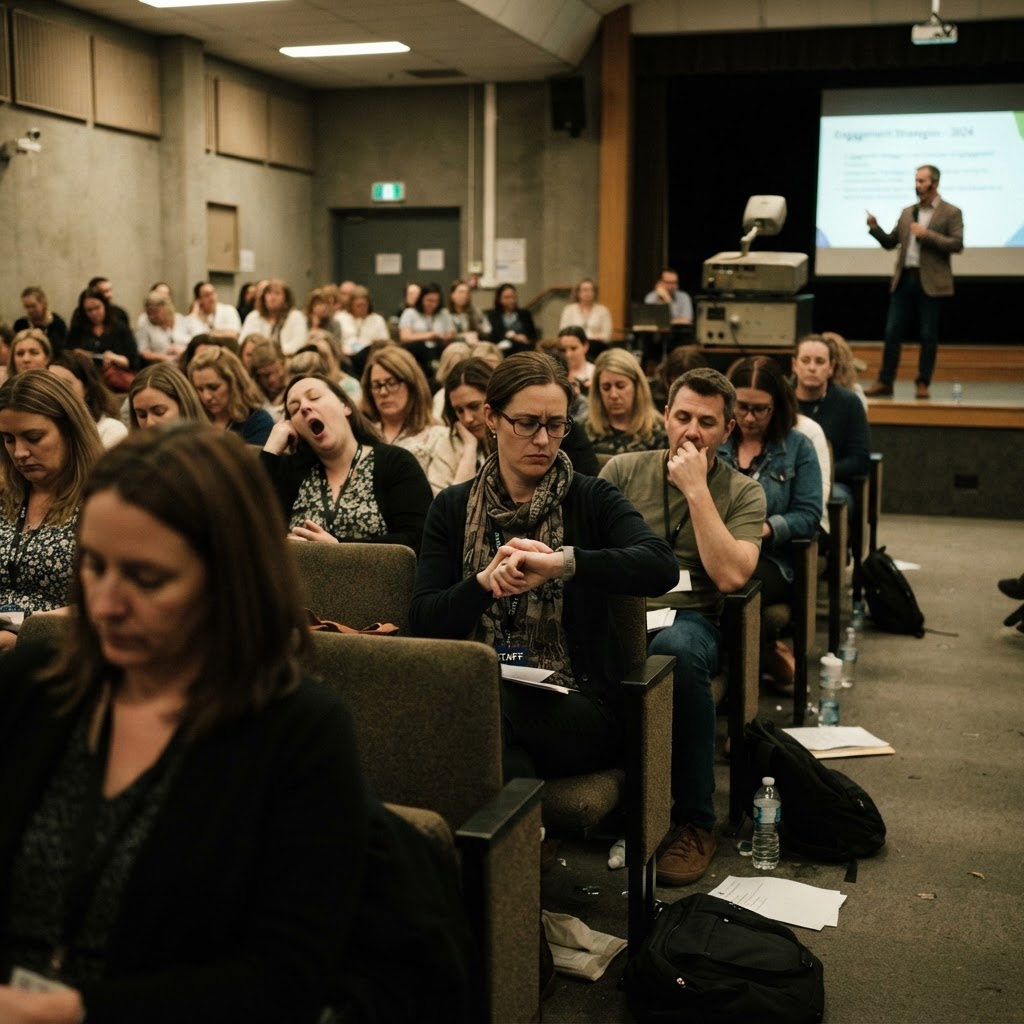
What separates professional development that actually changes classroom practice from PD that ends with a stack of handouts in the recycling bin? The Learning Policy Institute's review of 35 methodologically rigorous studies — led by Linda Darling-Hammond — found that programs linked to improvements in both teaching and student learning shared most or all of seven features.
The Seven Features
- Content-focused: PD that digs into the actual subject matter teachers teach, not generic teaching tips.
- Active learning: teachers read, write, discuss, solve problems, and — above all — practice, instead of being talked at.
- Collaboration: learning with and from colleagues, ideally across grades and subjects.
- Models of effective practice: demonstrations, video of real classrooms, and exemplars teachers can study.
- Coaching and expert support: feedback embedded in the work, not delivered once a year.
- Sustained duration: spread over weeks or months with opportunities to try, fail, and retry — the opposite of the one-shot workshop.
- Coherence: aligned with teachers' daily realities, standards, and prior learning.
The report's sharpest finding: in one program, teachers who received sustained PD of this kind saw their students achieve "significant gains" — while brief, one-off exposure produced no measurable change.

How to Use This List
Audit the PD on your calendar this semester against these seven features. If a session checks only one or two boxes, that is not a reason to skip it — but it is a reason to plan follow-up, practice, and peer conversation around it. The features compound: coaching plus collaboration plus sustained time is where the research shows real student gains. To go deeper, the full LPI report (PDF) describes each element with case studies of districts that got it right.