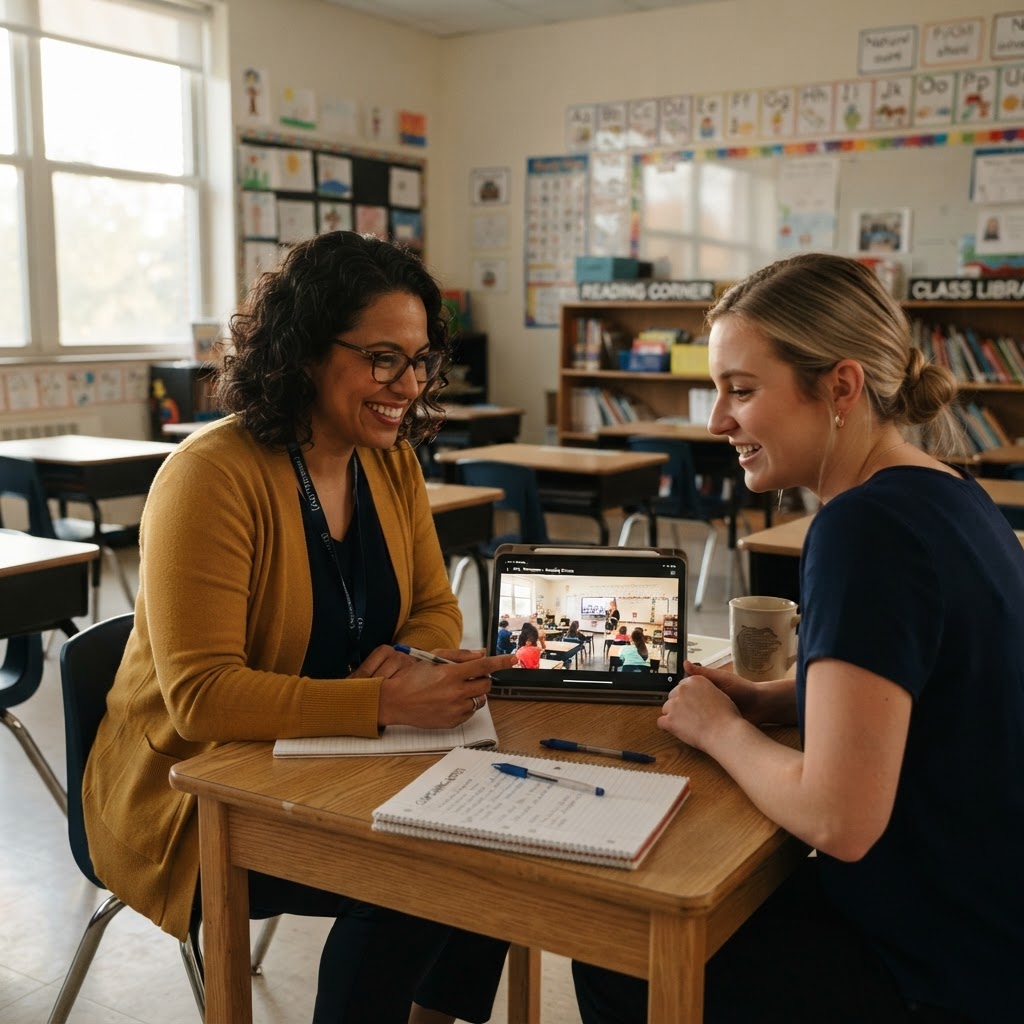
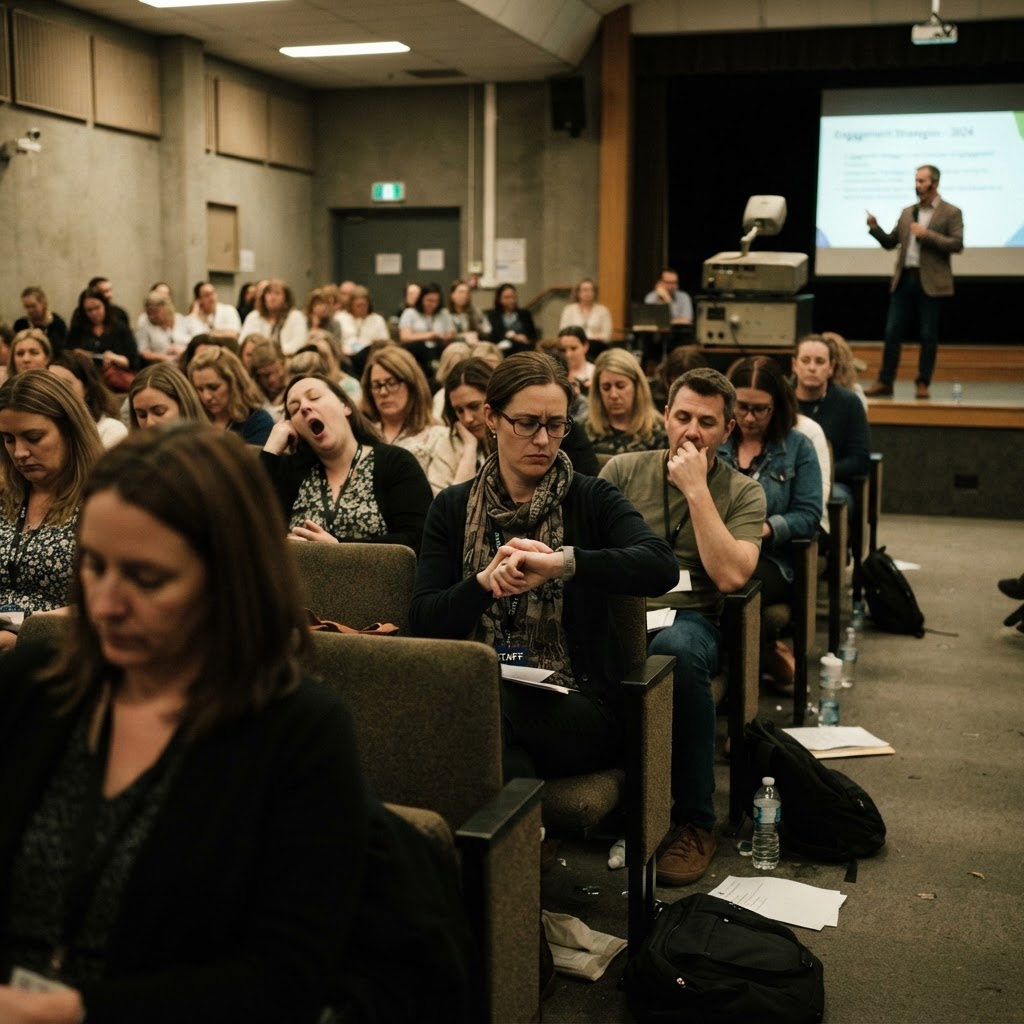
Every teacher knows the format: an outside expert, a darkened auditorium, a binder of slides, and a Tuesday afternoon that changes nothing by Wednesday. The research on why is consistent. Allison Gulamhussein's widely cited national study found that the "sit-and-get" workshop — a single session with no follow-up — is both the most common form of PD and the least effective, while programs that added sustained practice and follow-up produced meaningful changes in teaching. The Center for American Progress review of the PD landscape reached the same conclusion: districts spend heavily on workshops while the evidence points to job-embedded, ongoing models.
Why One Session Fails
- No practice: hearing about a strategy is not the same as being able to execute it mid-lesson with 27 students.
- No feedback loop: without someone watching you try it and helping you adjust, first attempts usually get abandoned after a bad day.
- No time: the Learning Policy Institute review found sustained duration in nearly every effective program — learning spread across weeks with cycles of implementation.
Teachers, like students, need spaced practice and feedback — the same learning science that applies in your classroom applies in the auditorium.
The Fix
If your school is stuck in one-shot mode, the cheapest upgrade is not better speakers — it is a follow-up structure: one session, then peer observation or coaching cycles over the next six weeks. Turn the workshop into the start of a practice cycle, and the same money buys real change.